

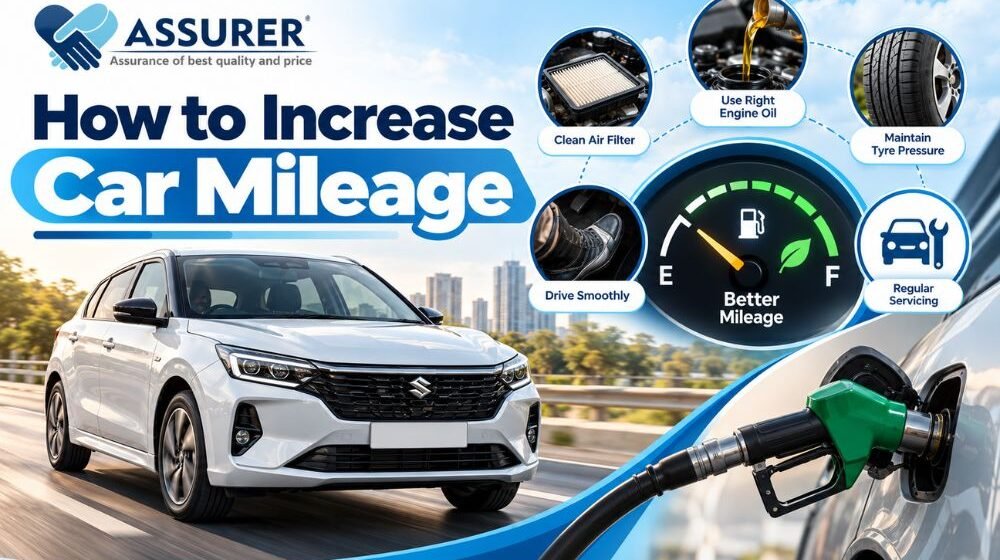
Let’s be honest. Every time you stop at a fuel pump, it hurts a little.
Fuel is the biggest running cost for most car owners. And it doesn’t matter if you drive a small hatchback in Delhi, a sedan in Dubai or an SUV in Nairobi. Everyone wants the same thing: more kilometres from every litre.
Here’s the good part. You don’t need a new car or fancy gadgets to save fuel. Most of the savings come from small changes in how you drive and how you take care of your car. Let’s go through them one by one.
First, What Does "Mileage" Mean?
Mileage simply means how far your car goes on a certain amount of fuel. But different countries measure it in different ways:
- India, Pakistan, Bangladesh, Nepal: kilometres per litre (km/l). More is better.
- USA: miles per gallon (MPG). People there call it “gas mileage.” More is better.
- UK: miles per gallon too, but with a bigger gallon. More is better.
- Europe, Middle East, Africa, Australia: litres per 100 km (L/100 km). Here, less is better.
Here's a quick table to compare:
| km/l | US MPG | UK MPG | L/100 km |
|---|---|---|---|
| 10 | 23.5 | 28.2 | 10.0 |
| 12 | 28.2 | 33.9 | 8.3 |
| 15 | 35.3 | 42.4 | 6.7 |
| 18 | 42.3 | 50.8 | 5.6 |
| 20 | 47.0 | 56.5 | 5.0 |
Want to convert it yourself? Multiply km/l by 2.352 for US MPG, or by 2.825 for UK MPG. For L/100 km, divide 100 by your km/l.
"Why Doesn't My Car Give the Mileage the Company Promised?"
This is one of the most common questions car owners ask.
The mileage printed in the brochure comes from a lab test. In India it’s called ARAI, in the USA it’s EPA, and in Europe it’s WLTP. These tests are the same for every car, which makes comparing easy. But they don’t include traffic jams, AC running all day, potholes, hills or a car full of family and luggage.
So getting a little less than the brochure figure is normal. What’s not normal is when your car suddenly gives much less than it used to. That’s a sign something needs checking, and the tips below will help you find it.
Driving Habits That Save Fuel
How to Increase Car Mileage starts with your driving habits. How you drive matters more than anything else. Good news: these tips are free and can help you save fuel every day.
1. Go easy on the accelerator and brakes
Hard acceleration and sudden braking burn a lot of fuel. According to the U.S. Department of Energy, aggressive driving can cut mileage by 15–30% on highways and by 10–40% in stop-and-go traffic. That’s huge.
Try this: press the accelerator slowly, and look far ahead. If you see a red light, lift your foot early and let the car slow down on its own.
2. Keep a steady speed
Driving fast feels good, but it costs fuel. Most cars start losing mileage quickly above about 80 km/h, because the wind pushes back harder. Just slowing down by 8–16 km/h on the highway can save around 7–14% fuel. Driving at 90 instead of 110 really adds up on long trips.
3. Change gears at the right time (manual cars)
Staying in a low gear at high revs wastes fuel. Shift up early and smoothly. Many cars have a small arrow on the dashboard telling you when to change gear. Follow it.
4. Don't keep the engine running while parked
A running engine that isn’t moving gives you zero mileage. Idling can burn around 1–2 litres an hour, depending on your car and AC. If you’ll be waiting more than a minute, switch off. Restarting a warm engine uses very little fuel.
5. Use cruise control on the highway
If your car has cruise control, use it on open roads. It keeps your speed steady and usually saves fuel. On hilly roads, turn it off, because it can push the engine too hard on climbs.
6. Be smart with your AC
The AC makes your engine work harder. Here’s a simple rule:
- Slow city driving: windows down usually saves more fuel.
- Highway driving: windows up and AC on is often better, because open windows slow the car down.
Also, park in the shade when you can. And before turning on the AC in a hot car, open the doors for a minute to let the hot air out.
7. Plan your trips
A cold engine uses more fuel. So instead of three short trips, try to do all your errands in one go. Avoid rush hour when possible, and use a maps app to skip traffic jams.
8. Try Eco mode
Many new cars have an “Eco” button. It makes the car a little gentler and helps save fuel in daily driving. If you have it, use it.
Car Care Tips That Improve Mileage
A healthy car uses less fuel. Here’s what to look after.
9. Check your tyre pressure every month
Tyres without enough air are harder to roll, so the engine works harder. Mileage drops about 0.2% for every 1 psi of missing air, and correct pressure can improve mileage by up to 3%.
Check pressure when the tyres are cold, like in the morning. You’ll find the right number on a sticker inside the driver’s door or in your car manual. Don’t use the number printed on the tyre itself. That’s the maximum, not the recommended pressure.
10. Use the right engine oil
Thicker oil than your engine needs creates more friction. For example, using 10W-30 oil in an engine made for 5W-30 can lower mileage by 1–2%. Always use the oil grade written in your car manual.
11. Get wheel alignment checked
If your car pulls to one side or the steering wheel looks a bit crooked, your wheels may be out of line. That wastes fuel and wears out tyres faster. Potholes and rough roads are the usual reason, so check alignment more often if your roads are bad.
12. Replace old spark plugs
Worn spark plugs don’t burn fuel properly. You may notice weak pickup or jerking. Change them when your car manual says to.
13. Keep the air filter clean (but here's the truth)
Many blogs say a new air filter will boost your mileage. For most modern cars, that’s not really true. A clean filter improves pickup, but the car’s computer adjusts fuel by itself, so mileage barely changes. On older carburettor cars, though, a clean filter can help both.
Still, a clean filter protects your engine, so change it on time, especially on dusty roads.
14. Don't ignore the check engine light
A bad sensor or even a loose fuel cap can make your car use more fuel. The tricky part is that the car may still drive normally. If this light comes on, get it checked by a mechanic.
15. Keep the fuel system clean
Dirty fuel injectors spray fuel unevenly. Fill up at good, busy fuel stations, and change the fuel filter on time.
16. Check for sticking brakes
If a brake doesn’t release fully, the engine has to push against it all the time. Signs to watch: one wheel feels very hot after driving, or the car feels heavy and slow. Get the brakes checked if you notice this.
17. Service on time with genuine parts
Regular service keeps everything working the way it should. Cheap copy parts might fit, but they often don’t work as well as the original, and poor mileage is one of the first signs.
Hidden Things That Eat Your Fuel
18. Extra weight
Old bags, tools, water bottles, things you forgot in the boot. It all adds up. About 45 kg of extra weight can lower mileage by around 1%, and small cars feel it more. Clean out your boot regularly.
19. Roof carriers
A big box on the roof acts like a wall against the wind. On the highway, it can reduce mileage by around 6–17%. Take it off when you’re not using it.
20. Wrong or poor-quality fuel
Use the fuel your car manual recommends, and fill up at busy, trusted fuel stations.
21. Wrong or worn-out tyres
Old, hard tyres and the wrong tyre size can both affect mileage. When it’s time for new tyres, stick to the size your car maker recommends.
Tips for City and Highway Driving
In the city:
- Keep a gap from the car ahead so you can keep rolling instead of stopping and starting
- Switch off the engine at long red lights and railway crossings
- Don’t rush to the next signal, you’ll just stop again
- Finish short errands together while the engine is warm
On the highway:
- Keep a steady speed and use cruise control
- Keep windows up above 80 km/h
- Remove roof carriers before long trips
- Check tyre pressure before you leave
Tips for Your Part of the World
India and South Asia: Traffic is the biggest fuel killer here. Drive smoothly, switch off at long signals, and keep tyres properly filled in the summer heat. If you drive on CNG, get the kit and filters serviced on time.
Middle East and Gulf: The heat means the AC runs all day. Park in the shade, use a sunshade, and keep the radiator and AC condenser clean.
Africa: Rough and dusty roads hurt alignment and clog air filters. Get alignment checked more often and change filters on time.
Cold countries: Engines use more fuel when cold. Don’t let the car idle for a long time to warm up. Driving gently is the fastest way to warm it.
Mileage Myths vs Facts
|
Myth |
The Truth |
|
Premium fuel always gives better mileage |
Only if your car is made for it. Use what your manual says. |
|
Fuel-saving gadgets and magnets work |
Independent tests show most do little or nothing. |
|
Driving in neutral saves fuel |
Not in modern cars. In gear, the engine cuts fuel when you lift off. In neutral, it keeps burning fuel to idle. It’s also less safe. |
|
Filling up in the morning gives more fuel |
Fuel is stored underground, so the difference is tiny. |
|
A new air filter always boosts mileage |
Only on old carburettor cars. Modern cars mostly get better pickup. |
|
You should warm up the engine for 10 minutes |
Modern engines need only a short warm-up. Gentle driving does the rest. |
Your Monthly Mileage Checklist
Save this and run through it once a month:
- Check tyre pressure (all four tyres and the spare)
- Check the engine oil level
- Clear extra weight out of the boot
- Remove roof carriers you’re not using
- Look for warning lights on the dashboard
- Check your mileage using the tank-to-tank method
- Check when your next service is due
How to Check Your Car's Real Mileage
Your dashboard figure isn’t always accurate. Here’s a simple way to find the real number:
- Fill your tank full and set the trip meter to zero.
- Drive like you normally do until the tank is at least half empty.
- Fill the tank full again and note how many litres it took.
- Divide the kilometres driven by the litres filled.
Example: You drove 420 km and it took 28 litres to fill up. 420 ÷ 28 = 15 km/l.
Do this a few times and keep a note. If your mileage suddenly drops, you’ll know something needs a look.
How Assurer Can Help You
A lot of mileage problems come from worn-out or poor-quality parts. A weak spark plug, a faulty sensor, a cheap thermostat or a sticking brake can quietly drink your fuel.
That’s where we come in.
Assurer is a New Delhi–based supplier and exporter of genuine spare parts for Hyundai, Maruti Suzuki Parts, Mahindra and other popular brands. We work with car owners, workshops, distributors and importers in India and around the world. And through this blog, we share simple car-care tips to help you keep your car running well for longer.
Here's what you get with us:
- Genuine parts matched to the right part number, so you get exactly what your car needs
- Help choosing the right part before you order, so you don’t buy the wrong one
- Quick replies on WhatsApp and email
- Worldwide shipping with all the export paperwork handled
- Free car-care guides on our blog, from engine overheating to buying genuine parts
Need a spark plug, sensor, filter or any other part? Just send your car model or part number on WhatsApp at +91 74289 08900, and our team will help you find the right one.
Final Thoughts
There’s no single magic trick to better mileage. It’s lots of small things working together: driving gently, keeping a steady speed, filling your tires, using the right oil and servicing on time with genuine parts.
Pick two or three tips from this list and start this week. Track your mileage with the tank-to-tank method, and you’ll start seeing the savings at the fuel pump.
Explore More:- Engine Overheating Causes
FAQs
What is the quickest way to increase car mileage?
Drive smoothly and check your tyre pressure. Avoiding hard acceleration and braking makes a big difference, and checking tires takes just five minutes.
Does AC reduce mileage?
Yes, the AC makes the engine work harder. In slow traffic, open windows usually save more fuel. On the highway, AC with windows closed is often better.
At what speed does a car give the best mileage?
It depends on the car, but most cars do best at a steady, moderate speed. Mileage usually drops quickly above about 80 km/h.
Does tyre pressure really affect mileage?
Yes. Low tyres are harder to roll, so your engine uses more fuel. They also wear out faster and are less safe.
Does premium petrol give better mileage?
Only if your car is designed for it. For most normal cars, regular fuel gives the same mileage.
Why has my car's mileage suddenly dropped?
Common reasons are low tyre pressure, a sticking brake, a faulty sensor, old spark plugs or the wrong engine oil. If the check engine light is on, get it checked.
Does servicing improve mileage?
Yes. Fresh oil, good spark plugs, clean filters and working sensors all help your engine use fuel properly.
Do fuel-saving gadgets really work?
Most don’t. Good driving habits and regular servicing save far more fuel than any gadget.
Is it better to idle or switch off the engine?
If you’ll be stopped for more than a minute, switch off. Restarting a warm engine uses very little fuel.
How do I calculate my car's mileage?
Fill the tank full, reset the trip meter, drive, fill up full again, then divide the kilometres by the litres.