

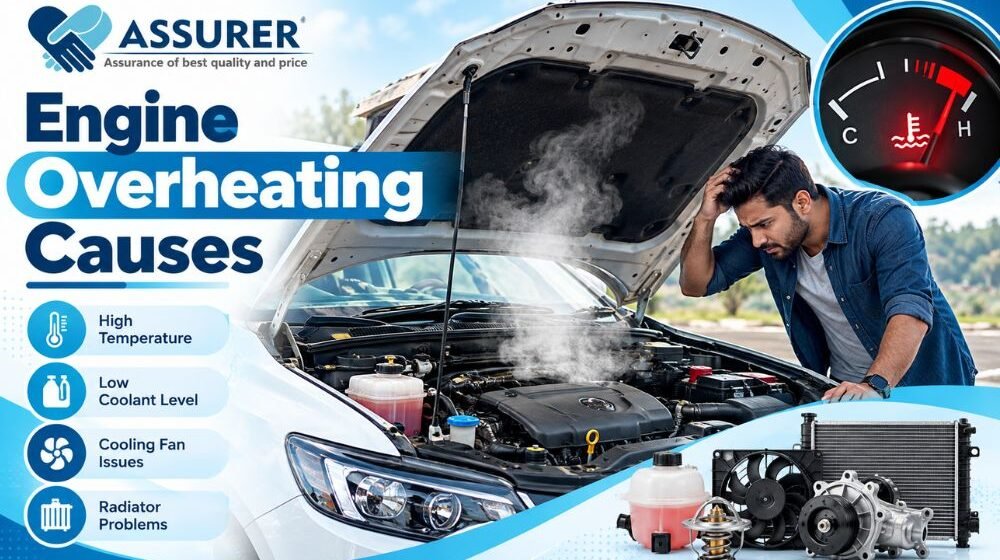
You’re stuck in traffic on a hot afternoon, and the temperature needle starts creeping towards red. A few minutes later, steam curls out from under the bonnet. It’s one of the most stressful moments a driver can face, and one of the most expensive if handled the wrong way.
The good news is that engine overheating almost never happens without a reason, and most of those reasons are simple to find once you know where to look. In this guide, we’ll walk through the 12 most common engine overheating causes, the early warning signs, exactly what to do if your car overheats on the road, and how to prevent it for good.
How Your Engine's Cooling System Works
To understand why an engine overheats, it helps to know how it stays cool in the first place.
Burning fuel inside the engine creates intense heat. Coolant, a mix of antifreeze and water, absorbs that heat as it flows through passages in the engine block and cylinder head. The water pump pushes the coolant around, the thermostat decides when it flows to the radiator, and the radiator releases the heat into the air. The radiator fan pulls in extra air when the car is slow or stopped, and the radiator cap keeps the system pressurised so coolant doesn’t boil too early.
Most engines run happily at around 90–105°C. When any single part of this system fails, heat builds faster than it can escape, and the temperature gauge starts to climb.
12 Common Engine Overheating Causes
1. Low Coolant Level or a Coolant Leak
This is the number one reason engines overheat. Coolant can escape through a cracked hose, a loose clamp, a leaking radiator, a worn water pump seal or a damaged heater core. With less coolant in the system, there simply isn’t enough liquid to carry the heat away.
Signs to watch for: puddles of green, pink or orange liquid under the car, a sweet smell from the engine bay, or a coolant reservoir that keeps dropping.
Fix: Find and repair the leak first, then top up with the coolant type your manufacturer recommends. Topping up without fixing the leak only buys you a few days.
2. Faulty Thermostat
The thermostat is a small valve that opens once the engine warms up, letting coolant flow to the radiator. If it gets stuck closed, coolant stays trapped in the engine and the temperature shoots up quickly, often within 10–15 minutes of driving.
Signs to watch for: the gauge rises fast after a cold start, while the upper radiator hose stays cool to the touch (check only when safe).
Fix: Replace the thermostat. It’s one of the cheaper cooling-system parts and a common first repair for overheating.
3. Water Pump Failure
The water pump keeps coolant moving. When its bearing wears out, its impeller corrodes, or its seal starts leaking, coolant circulation slows or stops altogether.
Signs to watch for: a whining or grinding noise from the front of the engine, coolant dripping from near the pump, or steady overheating even with full coolant.
Fix: Replace the water pump. On many engines, it’s driven by the timing belt, so mechanics often replace both together to save labour later.
4. Clogged or Damaged Radiator
Over time, rust, scale and old coolant can block the thin tubes inside a radiator. Outside, dust, mud, leaves and insects can pack the fins so air can’t pass through. Either way, the radiator can no longer release heat properly.
Signs to watch for: overheating that gets worse on long drives or in hot weather, visible dirt packed into the radiator fins, or cold spots on the radiator surface.
Fix: A cooling-system flush can clear light buildup. Clean the outer fins gently with low-pressure water. A radiator that is badly blocked or cracked should be replaced.
5. Radiator Fan Not Working
When you’re driving fast, air rushes through the radiator on its own. In slow traffic, the radiator fan does that job. If the fan motor, relay, fuse or temperature switch fails, the engine heats up every time you slow down.
Signs to watch for: the car stays cool on the highway but overheats in traffic or while idling, and you can’t hear the fan switching on.
Fix: Check the fuse and relay first, as they’re quick and cheap to test. If those are fine, the fan motor or its temperature switch may need replacing.
6. Blown Head Gasket
The head gasket seals the gap between the engine block and cylinder head. When it fails, hot combustion gases can push into the cooling system, or coolant can leak into the cylinders and burn away. This is often both a cause and a result of overheating.
Signs to watch for: thick white smoke from the exhaust, a milky, mayonnaise-like layer under the oil filler cap, bubbles in the coolant reservoir, or coolant disappearing with no visible leak.
Fix: This is a major repair. Stop driving and get the engine checked, because running on a blown gasket can warp the cylinder head or seize the engine.
7. Faulty Radiator Cap
It’s easy to overlook, but the radiator cap holds the cooling system under pressure. That pressure raises the coolant’s boiling point. A weak spring or worn rubber seal lets pressure escape, so coolant boils sooner and overflows.
Signs to watch for: coolant overflowing from the reservoir, a cracked cap seal, or collapsed hoses after the engine cools down.
Fix: Replace the cap with the exact pressure rating specified for your vehicle. It’s one of the cheapest fixes on this list.
8. Collapsed or Blocked Coolant Hoses
Rubber hoses harden, crack and swell with age. A weak lower hose can collapse under suction from the water pump, cutting off coolant flow even when everything else works.
Signs to watch for: hoses that feel soft, spongy, cracked or swollen, or visible leaks around the clamps.
Fix: Replace ageing hoses and clamps as a set. Most mechanics recommend checking them at every major service.
9. Air Lock in the Cooling System
After a coolant change or repair, air bubbles can get trapped in the system. Air doesn’t carry heat the way coolant does, so pockets of air create hot spots and erratic temperature readings.
Signs to watch for: the gauge jumps up and down, or the heater blows cold air even though the engine is hot.
Fix: “Bleed” the cooling system following your vehicle’s procedure to push the trapped air out.
10. Low Engine Oil
Engine oil doesn’t just lubricate; it also carries away a large share of the engine’s heat. When oil is low or old and broken down, friction rises and so does the temperature.
Signs to watch for: the oil warning light, a dipstick reading below the minimum mark, or a burning oil smell.
Fix: Top up with the correct grade and stick to your oil-change schedule. Also find out why the oil is low, whether it’s a leak or oil burning inside the engine.
11. Broken or Slipping Drive Belt
On many engines, the serpentine belt or fan belt turns the water pump and sometimes the cooling fan. If the belt slips, cracks or snaps, the pump stops working and the engine overheats very quickly.
Signs to watch for: a squealing noise at start-up, a battery or charging warning light, and power-steering that suddenly feels heavy.
Fix: Replace the belt and check the tensioner. A cracked belt should never be left until it breaks.
12. Faulty Coolant Temperature Sensor
Sometimes the engine isn’t actually overheating. A failing coolant temperature sensor can send false readings to the gauge and the ECU. In other cases, it tells the fan not to switch on when it should.
Signs to watch for: a gauge that reads hot while the engine feels normal, a check-engine light, poor fuel economy, or a fan that never turns on.
Fix: A mechanic can read the fault code with a scanner and replace the sensor if needed.
Other Factors That Make Overheating Worse
- Extreme heat and traffic: Summer temperatures of 45°C and above, common in North India, the Gulf and parts of Africa, put extra load on the cooling system, especially in stop-and-go traffic.
- Heavy loads and towing: Pickups and SUVs carrying full loads or towing trailers make the engine work harder and produce more heat.
- Running the AC hard: Air conditioning adds load to the engine and extra heat in front of the radiator. A dirty AC condenser can also block airflow.
- Wrong coolant or plain water: Plain water boils sooner and causes rust inside the engine. Always use the coolant type and mix your manufacturer recommends.
- Dusty roads: Rural and desert roads fill radiator fins with dust faster than city driving.
Engine Overheating Symptoms: Early Warning Signs
Catching overheating early can save you from a huge repair bill. Watch for:
- Temperature gauge rising above the middle mark
- Temperature warning light on the dashboard
- Steam or smoke coming from under the bonnet
- A sweet, syrupy smell (burning coolant)
- Knocking or pinging sounds from the engine
- Sudden loss of power or the engine going into limp mode
- Coolant boiling or bubbling in the reservoir
- Hot air from the AC instead of cold
Symptom vs Likely Cause: Quick Diagnosis Table
|
What you notice |
Most likely cause |
|
Overheats in traffic, fine on highway |
Radiator fan, relay or fan fuse |
|
Overheats on highway, fine in traffic |
Clogged radiator or low coolant |
|
Gauge rises quickly after starting |
Stuck thermostat |
|
Coolant level keeps dropping, no visible leak |
Blown head gasket |
|
Puddles under the car |
Hose, radiator or water pump leak |
|
White smoke + milky oil |
Blown head gasket |
|
Squealing noise + overheating |
Broken or slipping drive belt |
|
Gauge jumps up and down |
Air lock or faulty temperature sensor |
|
Overflowing reservoir |
Faulty radiator cap or head gasket |
What to Do When Your Engine Overheats
If your temperature gauge hits red, act quickly and calmly:
- Switch off the AC and turn the heater to full hot. It sounds odd, but it pulls heat away from the engine into the cabin.
- Pull over safely as soon as you can and switch off the engine.
- Open the bonnet to let heat escape, but stand back if you see steam.
- Never open the radiator cap on a hot engine. Pressurised coolant can spray out and cause serious burns. Wait at least 30 minutes.
- Check the coolant level in the reservoir once the engine has cooled, and top up if you have coolant (or clean water only in an emergency).
- Look for obvious problems such as a leaking hose, a broken belt, or a fan that isn’t turning.
- Get it checked before driving far. If the car overheated badly, or you see white smoke or milky oil, call for help rather than driving on.
Important: Continuing to drive an overheating engine can warp the cylinder head, blow the head gasket or seize the engine completely. A tow is almost always cheaper than a new engine.
How to Prevent Engine Overheating
- Check coolant monthly, with the engine cold, and top up with the right type.
- Flush and replace coolant at the interval in your owner’s manual, typically every 2–5 years depending on the coolant.
- Change engine oil on time and use the recommended grade.
- Inspect hoses and belts at every service for cracks, swelling or softness.
- Clean radiator fins regularly if you drive on dusty roads.
- Replace the thermostat and radiator cap as preventive parts on older vehicles.
- Keep an eye on the gauge. Knowing where your needle normally sits helps you spot trouble early.
- Use genuine parts. Cheap copies of thermostats, radiator caps and water pumps are a common reason for repeat overheating.
Why Genuine Cooling-System Parts Matter
A lot of repeat overheating complaints come down to poor-quality replacement parts. A copy thermostat that opens at the wrong temperature, a radiator cap with the wrong pressure rating, or a water pump with a weak impeller can undo a repair within weeks.
At Assurer, we supply genuine engine Parts and cooling-system parts for Hyundai, Maruti Suzuki, Mahindra and other brands to workshops and distributors in India and worldwide. If you’re a workshop or importer, send us the part number on WhatsApp at +91 74289 08900 and we’ll confirm fitment before you order.
Explore More:- Top 10 Genuine Mahindra Spare Parts Exporters from India
FAQs
What is the most common cause of engine overheating?
Low coolant, usually caused by a leak, is the most common reason. Other frequent causes are a stuck thermostat, a failed water pump, a clogged radiator and a faulty radiator fan.
Why is my car overheating even though the coolant is full?
If coolant is full, the problem is usually circulation or heat release. Check the thermostat, water pump, radiator fan and radiator for blockages. A blown head gasket or air lock can also cause this.
Why does my car overheat in traffic but not on the highway?
This almost always points to the radiator fan. At highway speeds, air flows through the radiator naturally, but in traffic the fan has to do the work. Check the fan motor, relay and fuse.
Can I drive my car if the engine is overheating?
No. Driving an overheating engine can warp the cylinder head, blow the head gasket or seize the engine. Pull over, switch off, and let it cool before checking anything.
Can I use water instead of coolant?
Only in an emergency, to get you to a garage. Plain water boils sooner, freezes in cold weather and causes rust. Flush it out and refill with proper coolant as soon as you can.
Can low engine oil cause overheating?
Yes. Oil carries a large amount of heat away from engine parts. Low or old oil increases friction and raises engine temperature.
How do I know if my head gasket is blown?
Common signs are thick white exhaust smoke, milky oil, bubbles in the coolant reservoir and coolant disappearing without a visible leak. A mechanic can confirm it with a pressure or compression test.
Can AC cause engine overheating?
The AC adds load to the engine and places a hot condenser in front of the radiator. In a healthy cooling system this is fine, but if the fan, radiator or coolant level is already weak, running the AC can push the engine into overheating.




Comments are closed