

Types of Car Filters Its Uses, Benefits & Functions plays an important role in keeping your vehicle clean, efficient, and running smoothly. Just like our body needs clean air and water to stay healthy, a car also needs clean air, oil, and fuel to perform properly. Different filters work together to remove unwanted particles, protect important components, and support the overall performance of your vehicle.
However, not all car filters perform the same job. Some protect the engine, while others improve cabin air quality or help maintain the transmission system. In this guide, we will explore the different types of car filters, their uses, benefits, functions, and maintenance requirements so you can understand how they help keep your vehicle in good condition.
Why Are Car Filters Important in a Car?
Car filters play an essential role in protecting different vehicle components from dust, dirt, debris, and other unwanted particles. During everyday driving, your vehicle is exposed to road dust, pollutants, fuel impurities, and other contaminants that can affect its performance.
Without properly functioning filters, these contaminants may enter important systems and cause unnecessary wear or reduced efficiency.
Here are some major reasons why car filters are important:
- Protect the engine: Air and oil filters help prevent harmful particles from entering or circulating through the engine.
- Maintain performance: Clean air and fuel support proper engine operation.
- Improve cabin air quality: Cabin filters help reduce dust, pollen, and other airborne particles entering the passenger compartment.
- Protect vehicle components: Transmission filters help remove contaminants from transmission fluid in vehicles equipped with them.
- Support long-term maintenance: Replacing filters at the recommended intervals helps prevent avoidable maintenance issues.
Types of Car Filters
Most modern vehicles use different types of filters to protect their essential systems. Although the exact number and design may vary depending on the vehicle model, engine, and transmission, five commonly discussed types are engine Air Filters, Oil Filters, Fuel Filters, Cabin Air Filters, and Transmission Filters.
Engine Air Filter
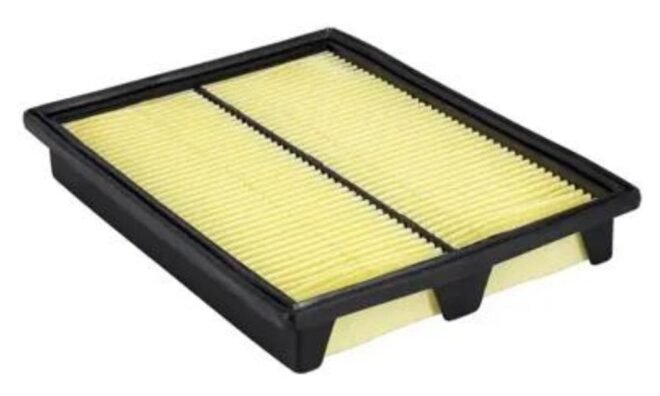
The Engine Air Filter is one of the most important filters in a car. Its primary function is to clean the air entering the engine by trapping dust, dirt, sand, and other airborne particles.
An engine requires a proper supply of clean air to support the combustion process. When contaminated air enters the engine, unwanted particles can contribute to wear and affect its operation. The air filter helps prevent this by allowing clean air to pass through.
Uses and Functions of an Engine Air Filter:
- Removes dust and dirt from incoming air.
- Helps maintain the required airflow to the engine.
- Protects internal engine components from contaminants.
- Supports proper fuel combustion.
- Helps maintain consistent engine performance.
Signs of a Dirty Engine Air Filter:
- Reduced engine performance.
- Unusual engine behaviour.
- Reduced acceleration.
- Increased fuel consumption in some conditions.
- Visible dirt or clogging during inspection.
Oil Filter
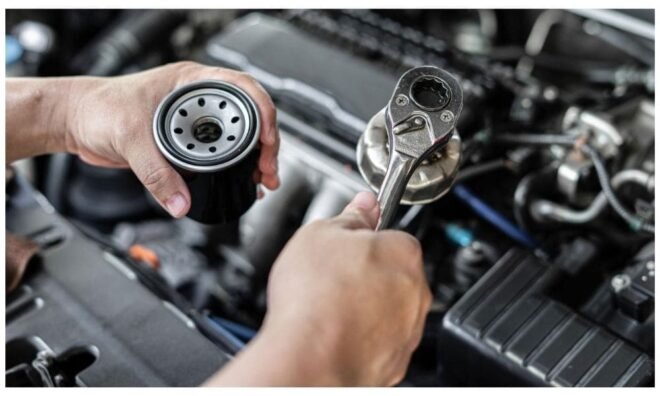
Engine Oil plays a major role in keeping the moving components of an engine properly lubricated. However, as the engine operates, small particles, dirt, and other contaminants can mix with the oil.
This is where the Oil Filter becomes important. It removes many of these contaminants from the engine oil before the oil circulates through the engine again.An oil filter helps maintain cleaner engine oil and supports the protection of important engine components.
Uses and Functions of an Oil Filter:
- Removes contaminants from circulating engine oil.
- Helps maintain proper oil cleanliness.
- Supports effective engine lubrication.
- Helps protect moving engine components.
- Reduces the circulation of harmful particles
Signs Your Oil Filter May Need Attention:
- Engine oil appears heavily contaminated.
- Oil-related warning lights appear.
- Unusual engine noise occurs.
- Oil leaks or other lubrication-related issues develop.
Fuel Filter
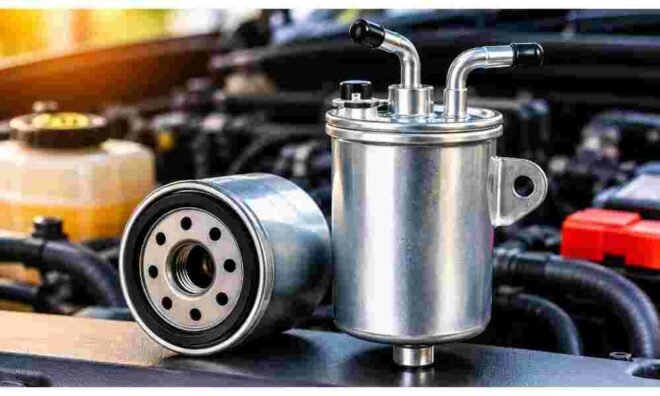
Have you ever wondered how your car prevents dirt and other impurities present in fuel from reaching the engine? A Fuel Filter performs this important task.
Fuel may contain small contaminants that can affect the fuel delivery system. The fuel filter helps trap these unwanted particles before the fuel reaches sensitive components such as injectors.
Uses and Functions of a Fuel Filter:
- Removes dirt and impurities from fuel.
- Helps protect fuel injectors and other fuel system components.
- Supports proper fuel delivery.
- Helps maintain consistent engine operation.
- In certain diesel systems, helps separate water from fuel.
Signs of a Clogged Fuel Filter:
- Difficulty starting the vehicle.
- Engine hesitation during acceleration.
- Irregular engine performance.
- Reduced power under certain driving conditions.
- Engine stalling in some cases.
Cabin Air Filter
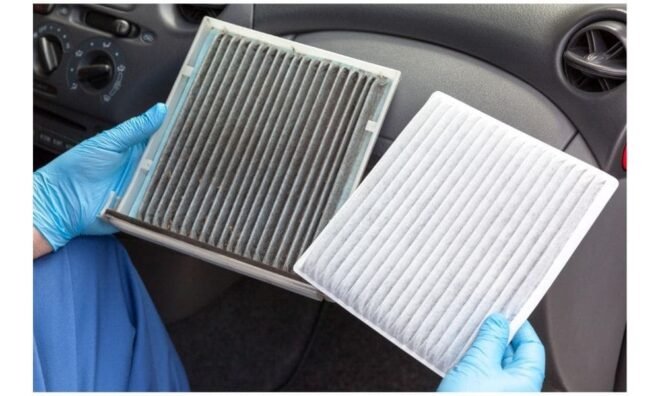
While engine filters protect mechanical components, the Cabin Air Filter focuses on the comfort of passengers.Every time you use your car’s air conditioning or ventilation system, outside air may enter the cabin through the ventilation system. This air can carry dust, pollen, pollution particles, and other airborne contaminants. The cabin air filter helps trap many of these particles before the air reaches the passenger compartment.
Uses and Functions of a Cabin Air Filter:
- Filters dust and airborne particles entering the cabin.
- Helps trap pollen and other allergens.
- Supports cleaner air circulation.
- Helps protect the ventilation system from debris.
- Activated carbon versions can help reduce certain odours
Signs of a Dirty Cabin Air Filter:
- Weak airflow from AC vents.
- Unpleasant smells inside the cabin.
- Increased dust inside the vehicle.
- Reduced ventilation performance.
Transmission Filter
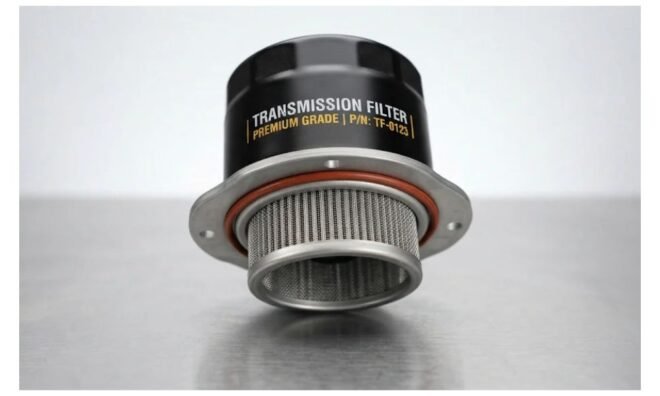
The transmission system helps transfer engine power to the wheels and allows the vehicle to operate at different speeds. In vehicles equipped with a serviceable Transmission Filter, this filter helps remove contaminants from the transmission fluid. During vehicle operation, small particles and debris may enter the transmission fluid. The transmission filter helps trap these contaminants and supports the proper functioning of the transmission lubrication and hydraulic systems.
Uses and Functions of a Transmission Filter:
- Helps remove contaminants from transmission fluid.
- Supports cleaner fluid circulation.
- Helps protect internal transmission components.
- Supports the operation of the transmission system.
Signs of Possible Transmission Filter or Fluid Problems:
- Delayed gear engagement.
- Unusual transmission behaviour.
- Difficulty shifting gears.
- Unusual transmission noises.
- Transmission-related warning messages.
Comparison of Different Types of Car Filters
|
Filter Type |
Main Function |
Main System Protected |
|
Engine Air Filter |
Cleans incoming air |
Engine |
|
Oil Filter |
Removes contaminants from engine oil |
Engine lubrication system |
|
Fuel Filter |
Removes impurities from fuel |
Fuel system |
|
Cabin Air Filter |
Filters air entering the cabin |
Cabin ventilation system |
|
Transmission Filter |
Filters transmission fluid |
Transmission system |
Signs Your Car Filters Need Replacement
Car filters gradually collect dust, dirt, and other contaminants during regular use. Over time, they may become clogged or lose their ability to filter effectively.
Recognising the warning signs early can help you avoid unnecessary vehicle problems.
Here are some common signs to look out for:
1. Reduced Engine Performance:- A clogged engine air filter or fuel filter may restrict the supply of air or fuel, affecting engine performance.
2. Poor Airflow From AC Vents:- If the airflow from your car’s AC vents becomes weaker than usual, a dirty cabin air filter could be one possible reason.
3. Unusual Engine Behaviour:- Engine hesitation, rough operation, or difficulty starting may sometimes be related to fuel or air filtration problems.
4. Unpleasant Cabin Smell:- A dirty cabin air filter can contribute to unpleasant odours when using the vehicle’s ventilation system.
5. Transmission Performance Issues:- Unusual shifting behaviour may indicate a transmission-related problem. A professional inspection can determine whether fluid condition, filtration, or another component is responsible.
How Often Should You Replace Car Filters?
One of the most common questions among car owners is how frequently different filters should be replaced.
The answer depends on several factors, including the vehicle model, driving conditions, engine type, filter design, and manufacturer’s recommendations.
|
Filter Type |
Replacement Guidance |
|
Engine Air Filter |
Inspect regularly and replace as recommended by the manufacturer |
|
Oil Filter |
Usually replace during every scheduled engine oil change |
|
Fuel Filter |
Follow the vehicle manufacturer’s recommended service interval |
|
Cabin Air Filter |
Inspect periodically and replace according to the service schedule |
|
Transmission Filter |
Replace according to transmission-specific maintenance requirements |
Important: If you regularly drive through dusty areas, heavy traffic, or challenging road conditions, some filters may require more frequent inspection. Always refer to your owner’s manual for the correct replacement interval.
What Happens If You Don't Replace Car Filters on Time?
Ignoring filter maintenance may affect different vehicle systems over time. A clogged or damaged filter may no longer perform its intended function effectively.
Some possible consequences include:
- Engine air filter: Restricted airflow may affect engine performance.
- Oil filter: Reduced filtration effectiveness may allow contaminants to circulate through the lubrication system.
- Fuel filter: Restricted fuel flow may affect engine operation.
- Cabin air filter: Poor filtration may reduce airflow and cabin air quality.
- Transmission filter: Contaminated or restricted filtration may affect transmission operation in applicable systems.
Regular inspection and timely replacement help keep these systems working as intended and reduce the risk of avoidable maintenance problems.
Tips to Maintain Your Car Filters for Better Performance
Maintaining car filters does not have to be complicated. Following a few simple practices can help you keep your vehicle’s filtration systems in good condition.
Here are some useful maintenance tips:
1. Follow the Manufacturer’s Service Schedule:- Every vehicle has specific maintenance requirements. Check your owner’s manual to understand when different filters should be inspected or replaced.
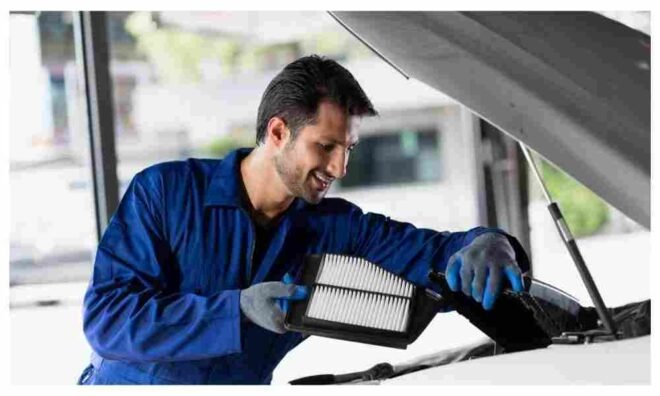
2. Inspect Filters During Regular Servicing:- Ask your mechanic to check the condition of accessible filters during routine vehicle servicing.
3. Choose the Correct Filter for Your Car:- Always check the vehicle’s make, model, year, engine type, and other relevant specifications before selecting a replacement filter.
4. Avoid Delaying Replacement:- If a filter is damaged, clogged, or has reached its recommended replacement interval, arrange for timely replacement.
5. Choose Quality Replacement Parts:- Using compatible, quality replacement filters helps ensure proper fitment and filtration. Genuine OEM parts are designed to meet the relevant vehicle manufacturer’s specifications.
Conclusion: Keep Your Car Protected with the Right Filters
Car filters play an essential role in maintaining your vehicle’s performance, protecting important components, and ensuring cleaner air and fluids throughout the system. From engine air and oil filters to fuel and cabin filters, each type serves a specific purpose. Regular inspection and timely replacement can help prevent unnecessary wear and keep your vehicle performing efficiently.
If you are looking for quality automotive filters, Assurer Auto Parts offers a range of filter categories to meet different vehicle maintenance requirements. You can explore our available Air Filters, Cabin Filters, Fuel Filters, and Oil Filters to find suitable replacement options.
You can also browse our complete collection of Automotive Filters and explore the available products for your vehicle. At Assurer Auto Parts, we aim to help automotive businesses source genuine OEM spare parts with confidence.
Frequently Asked Questions
How do I know which car filter is suitable for my vehicle?
Check your vehicle’s make, model, manufacturing year, engine type, and OEM part number. Choosing a compatible filter ensures proper fitment and filtration performance.
Do petrol and diesel cars use different fuel filters?
Yes, petrol and diesel engines generally use different fuel filtration systems because their fuel-system requirements differ. Always choose a filter compatible with your vehicle’s engine.
How often should car filters be replaced?
Replacement intervals depend on the vehicle model, driving conditions, and manufacturer’s recommendations. Always check your owner’s manual or consult a qualified mechanic for the correct replacement schedule.
Can dirty car filters affect fuel efficiency?
Yes, a clogged engine air filter or fuel filter can affect engine performance and, in some vehicles, fuel efficiency. Regular inspection helps maintain proper vehicle operation.
Can car air filters be cleaned and reused?
Some reusable air filters can be cleaned according to the manufacturer’s instructions. However, most standard paper engine air filters and cabin filters are designed for replacement rather than cleaning.