
A car battery is one of those parts most drivers don’t think about until the car refuses to start. Everything may seem perfectly normal one day, but the next morning, you turn the key or press the start button and nothing happens. Sometimes, the engine struggles to start, the headlights become dim, or electrical features begin behaving strangely.
These small changes are often early warnings that your car battery is getting weak.
The good news is that a failing battery usually gives you a few signs before it stops working completely. Recognising them early can help you avoid an unexpected breakdown, especially when you’re travelling or in a hurry.
In this guide, we’ll look at 10 common warning signs of a failing car battery, why they happen, and what you should do if you notice them.
Why Is Your Car Battery Important?
Your car battery does much more than simply start the engine. It supplies the electrical power needed to start the vehicle and supports different electrical systems when required.
When you turn the ignition on, the battery provides the initial power to the starter motor. It also helps operate systems such as the headlights, dashboard, central locking, infotainment system and other electronic components.
Once the engine is running, the alternator generally supplies electrical power and recharges the battery.
If the battery becomes weak or damaged, your car may start showing electrical problems. That’s why paying attention to its condition is important.
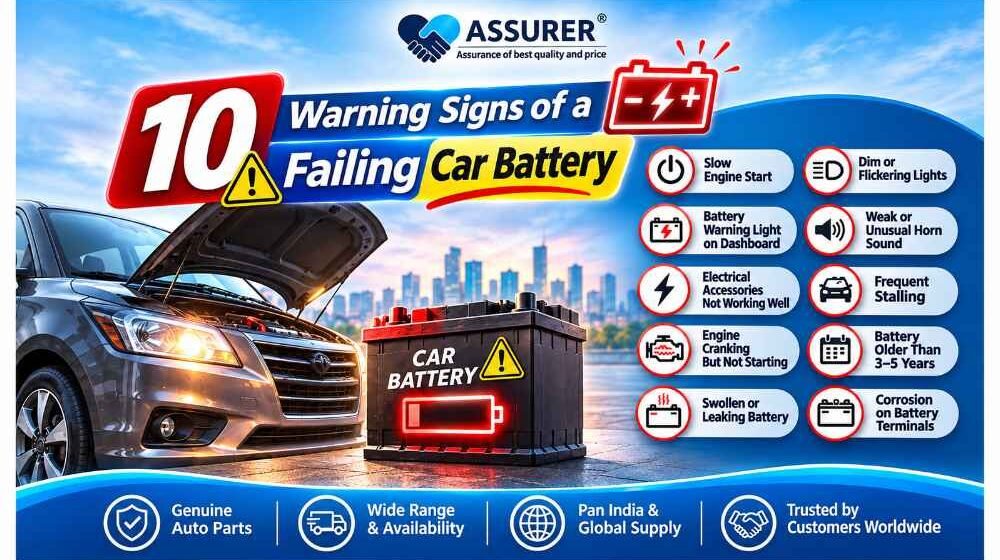
10 Warning Signs of a Failing Car Battery
1. Your Engine Takes Longer to Start
One of the most common signs of a weak car battery is a slow engine start.
Normally, when you turn the key or press the start button, the engine should start quickly. But if the battery is losing its strength, the starter motor may not receive enough power to turn the engine properly.
You might hear a slow cranking sound, as if the engine is struggling to come to life.
This can happen more frequently during cold mornings or after your car has been parked for several hours.
What should you do?
If your engine repeatedly takes longer to start, get the battery tested. Don’t wait until it completely loses its charge. Also, ask a mechanic to check the starter motor and charging system to rule out other problems.
2. Clicking Sound When You Try to Start the Car
Have you ever turned your car key and heard a clicking sound instead of the engine starting?
This can be a sign that your battery is too weak to provide the power needed by the starter motor.
Sometimes, you’ll hear a single click. In other cases, there may be several rapid clicks when you attempt to start the vehicle.
However, clicking sounds don’t always mean the battery is faulty. Loose battery connections, a damaged starter motor or electrical issues can also cause similar symptoms.
What should you do?
Check whether the battery terminals are properly connected and look for visible corrosion. If the problem continues, have the battery, starter and electrical connections inspected.
3. Headlights Become Dim
Your headlights can also tell you something about your car battery’s condition.
If they appear noticeably dimmer than usual, especially when the engine is switched off, it could indicate a weak battery or an electrical system problem.
You may also notice that the dashboard lights become dim or flicker when starting the engine.
Keep in mind that dim headlights can also result from a faulty alternator, damaged wiring or poor electrical connections.
What should you do?
Don’t ignore changes in headlight brightness. Get the battery and alternator checked to identify the actual cause. Driving with weak headlights can also reduce visibility at night, so address the issue promptly.
4. Electrical Features Start Working Slowly
Modern cars depend on several electrical systems. Power windows, central locking, infotainment systems, dashboard displays and interior lights all need a stable electrical supply.
When the battery becomes weak, you may notice that some of these features don’t work as smoothly as before.
For example:
- Power windows may move more slowly than usual.
- Central locking may respond inconsistently.
- Interior lights may appear dim.
- The infotainment system may restart unexpectedly.
- Dashboard displays may flicker.
These symptoms don’t automatically confirm a failing battery, but they are worth investigating, particularly when several electrical problems appear together.
What should you do?
Have the battery voltage and charging system checked. A mechanic can also inspect the relevant fuses, wiring and electrical connections.
5. Battery Warning Light Appears on the Dashboard
The battery-shaped warning light on your dashboard is another sign you shouldn’t overlook.
Many drivers assume that this light always means the battery needs replacing. That’s not necessarily true.
In most vehicles, the battery warning light indicates a problem with the charging system. This could involve the alternator, drive belt, wiring, battery connections or the battery itself.
If the light stays on while the engine is running, your car may not be charging the battery properly.
What should you do?
Get the charging system inspected as soon as possible. If the battery is no longer receiving a proper charge, the vehicle may eventually lose electrical power and stop running.
6. You Need to Jump-Start Your Car Frequently
Jump-starting your car once doesn’t necessarily mean the battery has reached the end of its life. You may have accidentally left the headlights on or an electrical accessory running.
However, if you repeatedly need another vehicle or a jump starter to get your engine running, something is wrong.
A weak battery may no longer hold enough charge to start the engine reliably.
There are other possible reasons too, including an alternator that isn’t charging properly or an electrical component that drains the battery while the car is parked
What should you do?
Get a battery health test rather than repeatedly relying on jump-starts. Ask the technician to check the alternator and parasitic battery drain as well.
7. Battery Case Looks Swollen or Damaged
Take a moment to look at your car battery. Does its outer case appear swollen, cracked or deformed?
A swollen battery case can indicate excessive heat exposure, overcharging or internal battery damage.
This is not something you should ignore. A damaged battery may leak, release harmful gases or become unsafe to use.
What should you do?
If you notice swelling, cracks or leakage, stop using the battery and arrange a professional inspection or replacement. Avoid touching leaking battery fluid, and never attempt to open or repair the battery yourself.
8. Corrosion Around Battery Terminals
If you open the bonnet and notice a white, blue or greenish powder around the battery terminals, it may be corrosion.
Battery terminal corrosion can interfere with the electrical connection between the battery and the vehicle. As a result, your car may experience starting difficulties or inconsistent electrical performance.
Corrosion doesn’t always mean the battery itself is failing. It can also develop because of battery ageing, leakage or other chemical reactions.
What should you do?
Have the terminals inspected and cleaned safely. If corrosion keeps returning, ask a mechanic to check the battery for leakage or damage.
Avoid cleaning the terminals while the battery is connected unless you know the correct safety procedure.
9. Your Battery Is More Than Three to Five Years Old
Car batteries don’t last forever. Their lifespan depends on the battery type, driving habits, weather conditions, vehicle usage and maintenance.
Many conventional car batteries last around three to five years, although some may last longer and others may fail earlier.
In hot weather, battery ageing can happen faster than many drivers expect. Frequent short trips and long periods of inactivity can also affect battery performance.
Even if your battery seems to be working normally, an older battery deserves attention.
What should you do?
Check the manufacturing or installation date and get the battery tested regularly as it gets older. If the test shows poor health or insufficient starting capacity, consider replacing it before it fails unexpectedly.
10. A Rotten Egg Smell Comes From the Battery
A strong rotten egg smell around the battery can indicate a serious problem.
This smell may be caused by hydrogen sulphide gas, which can be released when a lead-acid battery is damaged or overcharged.
You may also notice leakage, unusual heat or visible damage around the battery.
This is not a normal sign of battery ageing and should be treated seriously.
What should you do?
Switch off the vehicle if it is safe to do so, avoid sparks or flames, and do not lean over or handle the battery. Arrange a professional inspection. If there is significant leakage, smoke or a strong gas smell, keep your distance and seek appropriate assistance.
How Long Does a Car Battery Usually Last?
You don’t always need to wait for a starting problem to find out whether your battery is healthy. A few basic checks can help you identify potential issues.
1. Check the battery's appearance
Look for cracks, swelling, leakage and corrosion around the terminals. Never handle a damaged or leaking battery.
2. Check the battery voltage
A mechanic can use a digital multimeter to measure battery voltage. A fully charged conventional 12V lead-acid battery typically reads around 12.6 volts when the engine is off and the battery has been resting. However, voltage alone cannot confirm battery health.
3. Get a battery load test
A load or conductance test helps assess whether the battery can deliver sufficient power to start the engine. This is more useful than relying on voltage alone.
4. Check the alternator
A battery may keep losing charge because the alternator isn’t charging it correctly. Testing the charging system helps identify this problem.
Can You Drive With a Weak Car Battery?
It depends on how weak the battery is and what is causing the problem.
If your car starts normally but the battery is showing early signs of weakness, you may be able to drive it to a nearby service centre. However, there is no guarantee that it will start again after you switch the engine off.
If the battery warning light stays on while driving, the charging system may not be working properly. The vehicle could eventually lose electrical power.
It’s better not to take unnecessary risks. Get the problem checked promptly, especially before a long journey.
When Should You Replace Your Car Battery?
You should consider replacing your car battery when:
- A battery test shows that it has poor health or insufficient starting capacity.
- The battery repeatedly fails to hold a charge.
- Your car frequently struggles to start despite properly working connections and charging components.
- The battery case is swollen, cracked or leaking.
- The battery has reached the end of its expected service life and is showing signs of deterioration.
Always choose a battery that matches your vehicle manufacturer’s specifications, including the correct size, voltage, capacity and terminal arrangement.
For vehicles with start-stop systems or advanced electrical features, the correct battery technology is particularly important. Some cars require an AGM or EFB battery rather than a conventional flooded battery.
Tips to Make Your Car Battery Last Longer
A little attention can help you avoid unnecessary battery problems.
- Avoid leaving lights on: Switch off headlights and interior lights before leaving your vehicle.
- Drive your car regularly: Long periods without use can allow the battery to discharge.
- Keep terminals clean: Check for corrosion and get the connections inspected when needed.
- Avoid unnecessary electrical load: Don’t leave accessories running when the engine is switched off.
- Check battery health: Arrange periodic battery tests, especially if your battery is getting older.
- Use the right battery: Always follow the manufacturer’s battery specifications when replacing it.
These habits won’t make a battery last forever, but they can help you spot problems early and reduce avoidable wear.
Final Thoughts
Your car battery may be small, but it plays a major role in keeping your vehicle running smoothly. Slow starting, dim headlights, clicking sounds and repeated jump-starts are all signs worth paying attention to.
The important thing is not to wait until your car refuses to start. A simple battery health test can help identify problems early and save you from an inconvenient breakdown.
If your battery is getting older or showing any of these warning signs, have the battery and charging system checked by a qualified technician. A timely inspection can help you make the right decision about repair or replacement.
More Suggestions:-
Frequently Asked Questions
What are the first signs of a failing car battery?
The earliest signs often include slow engine cranking, dim headlights, clicking sounds when starting the car and electrical features behaving inconsistently. If you notice these symptoms, get the battery tested.
How do I know if my car battery needs replacing?
A battery that repeatedly struggles to start the engine, fails a battery health test or cannot hold its charge may need replacement. Visible swelling, cracks or leakage are also serious warning signs.
How many years does a car battery last in India?
A typical car battery lasts around three to five years, but Indian weather conditions, especially high temperatures, can affect its lifespan. Driving habits and maintenance also make a difference.
Can a weak battery affect car performance?
Yes. A weak battery can cause starting problems and electrical issues. In modern vehicles, low or unstable voltage may also trigger warning messages or unusual electronic behaviour.
Does a car battery charge while driving?
Yes. In most conventional petrol and diesel cars, the alternator charges the battery while the engine is running. However, the charging rate depends on the vehicle and its electrical system.
Can a car battery suddenly stop working?
Yes. Although many batteries show warning signs before failing, an ageing or internally damaged battery can stop working unexpectedly.
Should I replace my car battery after three years?
Not necessarily. Three years is not a compulsory replacement deadline. Get the battery tested and replace it when its condition or performance indicates that it is no longer reliable.