
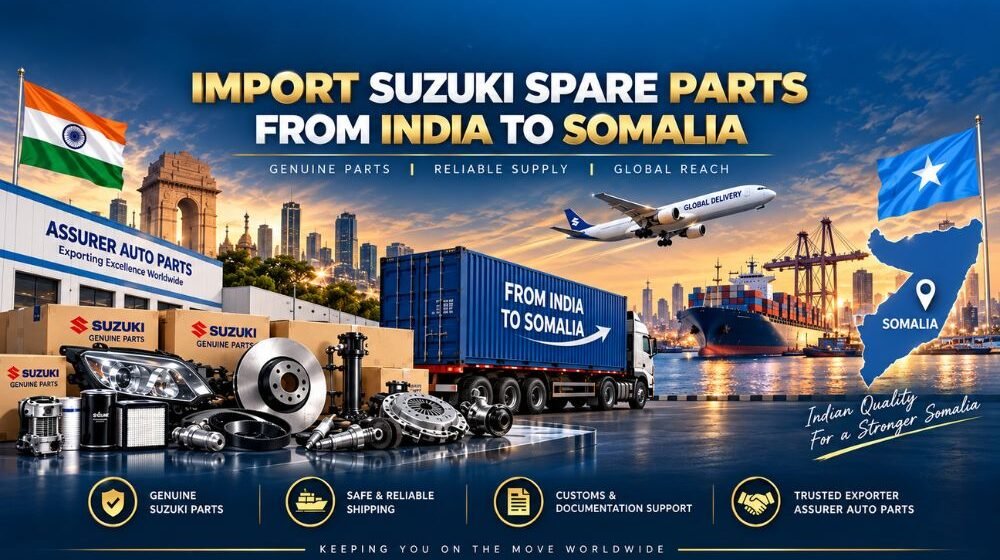
Somalia’s vehicle market runs heavily on Suzuki — from the Suzuki Alto and Wagon R weaving through Mogadishu’s streets to Suzuki pickups and vans used across trade routes into Hargeisa and Kismayo. But keeping these vehicles on the road depends on one thing: a steady, reliable supply of genuine spare parts. And for most Somali importers, distributors, and workshop owners, India has become the go-to source — thanks to its massive OEM manufacturing base, competitive pricing, and proximity via sea freight.
If you’re planning to import Suzuki spare parts from India to Somalia, this guide walks you through the entire process — from sourcing genuine parts to clearing customs in Mogadishu or Berbera.
Why India Is a Top Source for Suzuki Spare Parts
India is home to some of the world’s largest OEM and OES manufacturing hubs supplying Maruti Suzuki components — the same parts that go into Suzuki vehicles sold and used across Africa and the Middle East. Sourcing from India gives Somali buyers:
- Genuine OEM quality at significantly lower prices than European or Japanese aftermarket alternatives
- High-volume manufacturing capacity, meaning consistent stock availability
- Established export infrastructure through ports like Mundra, Nhava Sheva (JNPT), and Kandla, with regular shipping lanes to East African ports
- English-speaking trade documentation and communication, simplifying cross-border business
Step-by-Step: Import Suzuki Spare Parts from India to Somalia
1. Identify the Parts You Need
Start with a clear parts list — engine components, suspension parts, body panels, filters, brake systems, electricals, etc. Cross-check part numbers against your vehicle’s chassis/VIN to avoid ordering incompatible parts. A trusted exporter will help verify part numbers before quoting.
2. Choose a Verified Exporter
This is the step that makes or breaks the entire import process. Somalia’s market has seen its share of counterfeit and misrepresented “genuine” parts, so working with a verified, export-experienced supplier is critical. Look for:
- A documented export track record to African markets
- Genuine OEM sourcing (not just aftermarket relabeled as OEM)
- Clear quality certifications and invoicing
- Responsive communication and sample/photo verification before shipment
Assurer is a genuine OEM auto spare parts exporter based in India, trusted by distributors and workshops across the Middle East, Africa, and Southeast Asia — including buyers in Somalia. Assurer supplies verified Suzuki spare parts with proper documentation, competitive bulk pricing, and export experience specifically suited to African import requirements.
3. Get a Quotation and Proforma Invoice (PI)
Once you’ve finalized your parts list and supplier, request a Proforma Invoice detailing:
- Part descriptions and quantities
- Unit and total pricing
- Payment terms (advance, LC, or partial payment)
- Incoterms (FOB, CIF, or CFR — CIF is common for Somali importers as it includes freight and insurance)
4. Arrange Payment Terms
Most India-to-Somalia spare parts trade is conducted via:
- Advance payment (T/T) for smaller or first-time orders
- Partial advance + balance before shipment for larger bulk orders
- Letter of Credit (LC) for high-value, recurring business relationships
Established exporters like Assurer typically offer flexible terms once trust is built over repeat orders.
5. Shipping and Documentation
Once payment is confirmed, the exporter arranges:
- Commercial Invoice & Packing List
- Bill of Lading (B/L) — issued once the shipment is loaded
- Certificate of Origin — often required for Somali customs clearance
- Packing List with HS codes for each part category
Shipments typically move via sea freight from Indian ports to Mogadishu Port or Berbera Port, with transit times ranging from 12–20 days depending on route and transshipment.
6. Customs Clearance in Somalia
On arrival, your customs clearing agent in Somalia will need:
- Bill of Lading
- Commercial Invoice
- Packing List
- Certificate of Origin (if applicable)
Import duties on auto spare parts vary based on classification (HS code), so it’s worth confirming current rates with your local clearing agent or Somali customs authority before shipment, as rates are subject to change.
7. Receive, Verify, and Distribute
Once cleared, inspect the shipment against your packing list and part numbers before distributing to your dealership, workshop, or retail network.
Common Challenges Somali Importers Face — and How to Avoid Them
- Counterfeit parts: Only work with exporters who provide verifiable OEM sourcing and are willing to share certifications or batch documentation.
- Delayed shipments: Choose exporters with established freight-forwarder relationships and realistic lead times communicated upfront.
- Customs documentation errors: Ensure your exporter provides accurate HS codes and complete paperwork — incomplete documentation is the top cause of clearance delays.
- Payment security for first-time orders: Start with smaller trial orders to build trust before scaling to bulk shipments.
Why Choose Assurer for Suzuki Spare Parts Import to Somalia
As a trusted supplier of genuine OEM automobile spare parts, Assurer works directly with distributors and workshops across Somalia and other African markets, offering:
- Verified genuine Suzuki OEM parts sourced directly from manufacturing hubs
- Export documentation handled end-to-end for smooth customs clearance
- Competitive bulk pricing for distributors and workshop networks
- Reliable communication and order tracking from quotation to delivery
Whether you’re a first-time importer or scaling an existing spare parts business in Somalia, Assurer’s export experience helps reduce the guesswork — and the risk — of sourcing from overseas.
FAQs
Is it cheaper to import Suzuki spare parts from India than sourcing locally in Somalia?
Yes, in most cases. Direct import from Indian OEM exporters cuts out multiple middlemen, resulting in lower per-unit costs, especially for bulk orders.
How long does shipping take from India to Somalia?
Sea freight shipments typically take 12–20 days depending on the port of loading, transshipment hub, and destination port (Mogadishu or Berbera).
What documents do I need to import spare parts into Somalia?
You’ll generally need a Commercial Invoice, Packing List, Bill of Lading, and Certificate of Origin, along with any documentation required by your customs clearing agent.
How do I verify a spare parts exporter is genuine before placing an order?
Ask for their export history, request product certifications or batch documentation, and consider a small trial order before committing to bulk purchases.
Does Assurer ship directly to Somalia?
Yes, Assurer exports genuine OEM Suzuki spare parts to distributors and workshops across Somalia as part of its broader African and Middle East export network.